The Scars of Life in the Mountains: A Snow Leopard Attacks a Calf, Bringing Pain to the Mother Cow and Its Owner, Yangskit
By Jigmat Lundup, 2026
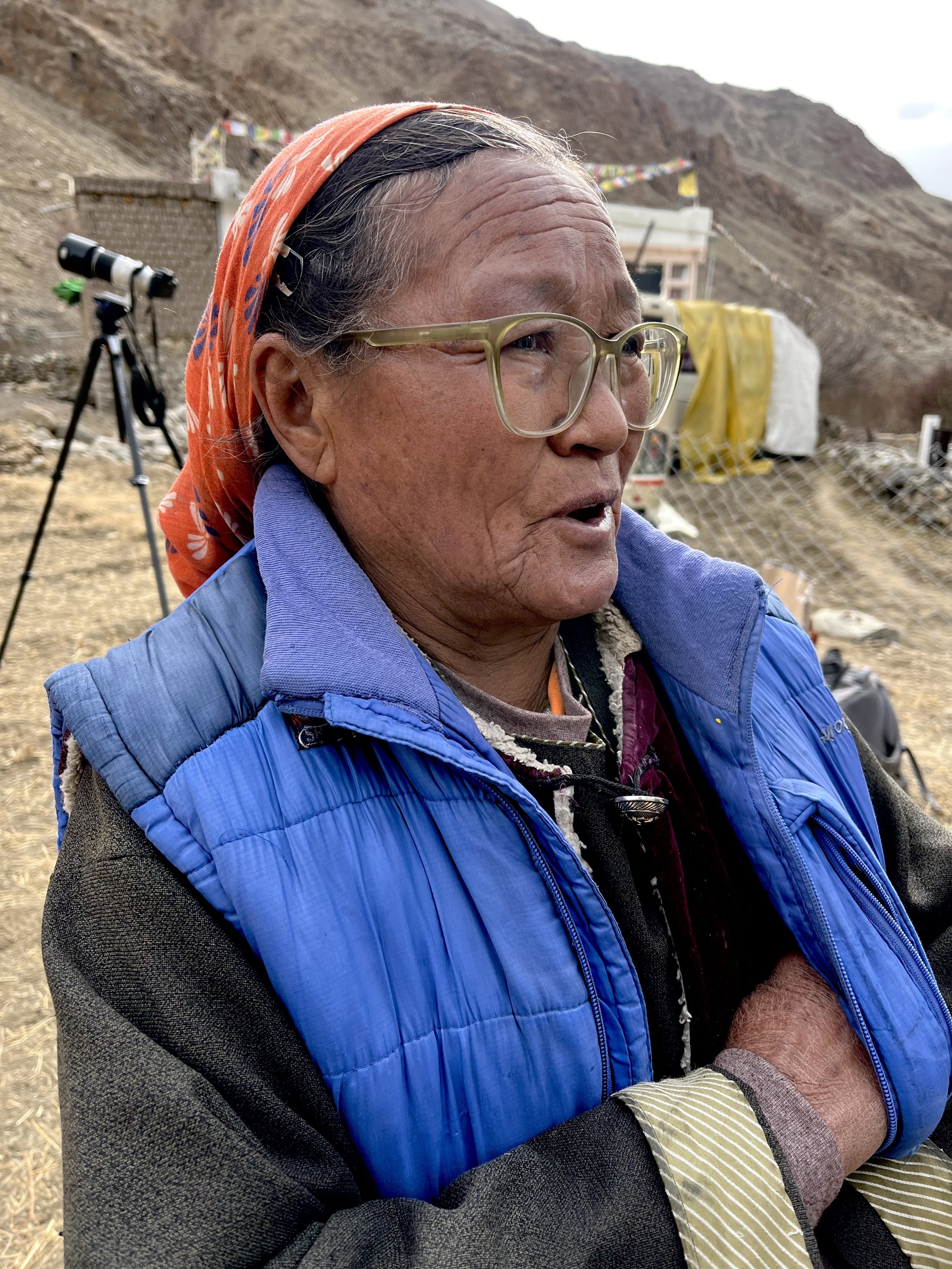
In the village of Ney, at Yangskit’s home, the incident unfolded one quiet afternoon. After finishing her milking, Yangskit went inside for tea, unaware that a snow leopard was watching her cow and young calf from the ridge above.
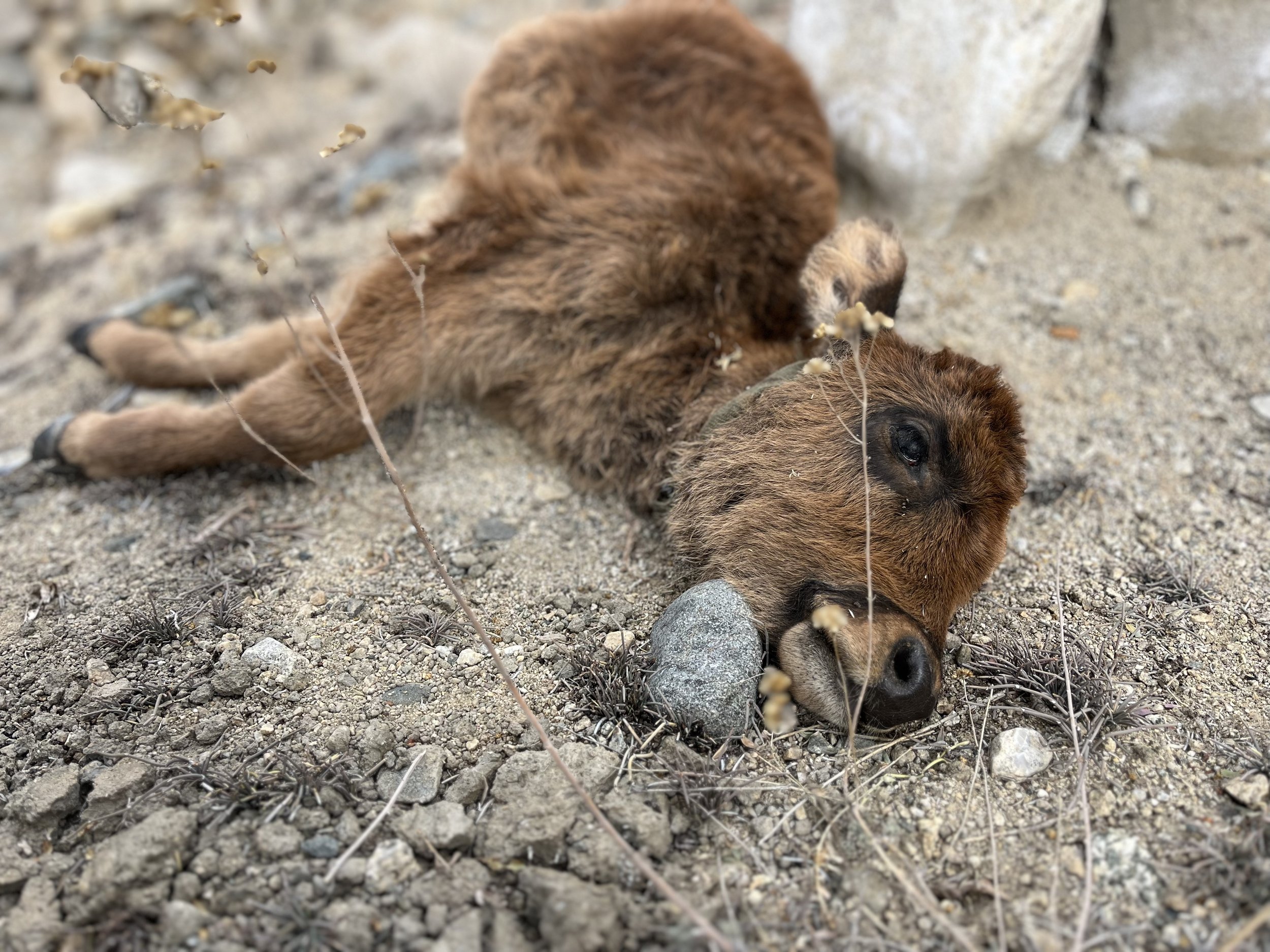
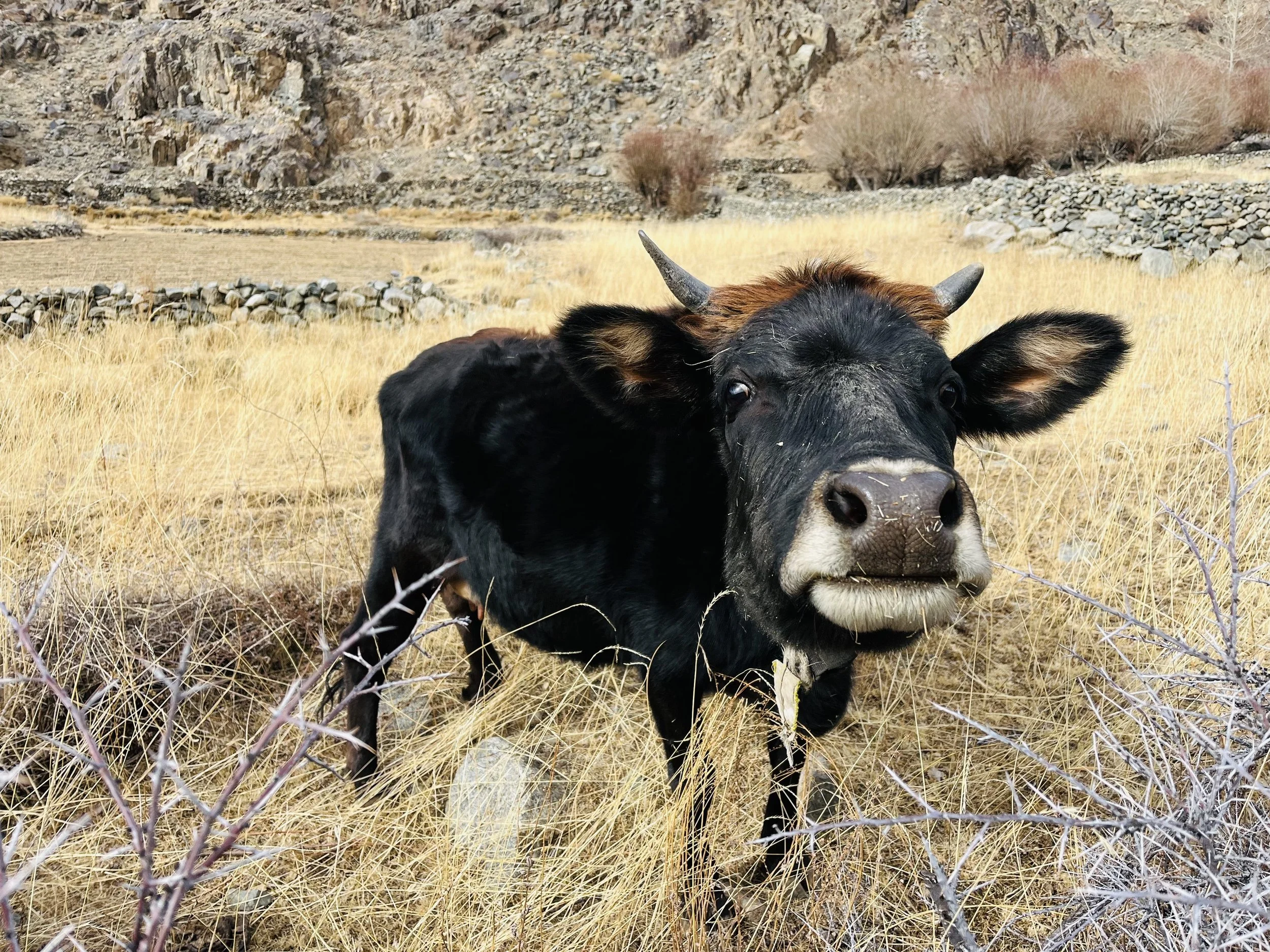
Almost twenty minutes later, as she stepped out to fetch firewood, she heard her dzo calling loudly. It was a strange alarmed, distressed cry. Following its gaze, she looked up and saw the snow leopard dragging away her calf. The mother cow stood beside her baby, licking her fallen young, helpless. Shocked, Yangskit shouted for her husband and tried to scare the snow leopard away. But the predator refused to leave its kill until her husband arrived.
That night, Yangskit barely slept. The scene replayed again and again in her dreams. The next morning, her distressed cow produced only a fraction of the four litres of milk she normally gives at each milking. The mother cow was clearly traumatised.
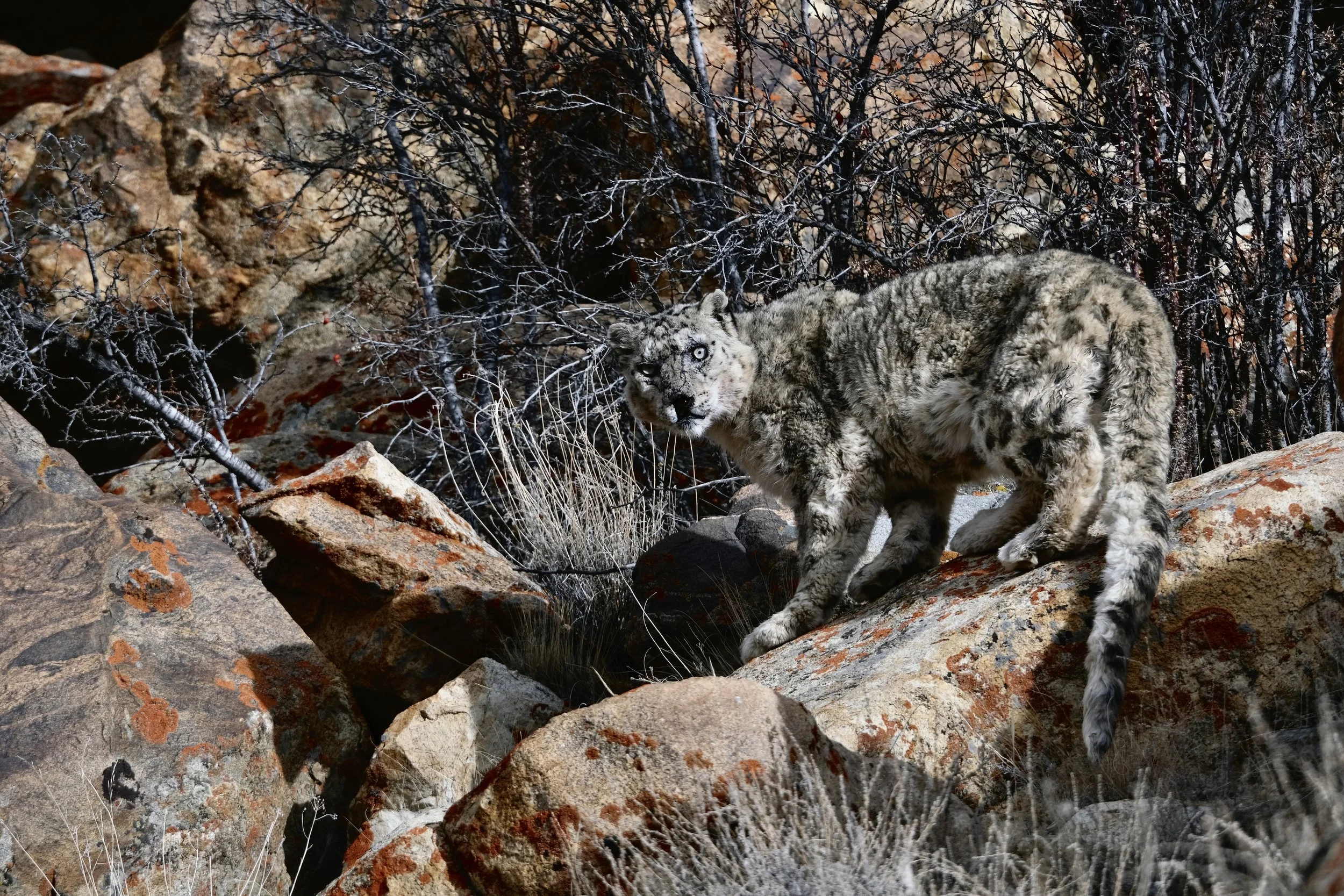
This was the same mature snow leopard seen in Ney last year, when it had taken another cow from a neighbour. The deep scars on its face tell a story of a hard life in the mountains. As snow leopards age, they often struggle to hunt wild prey. Weakened and slower, they are forced to target livestock near villages. And one of the harsh realities of life in the high Himalayas is that it affects these domesticated animals and their owners.
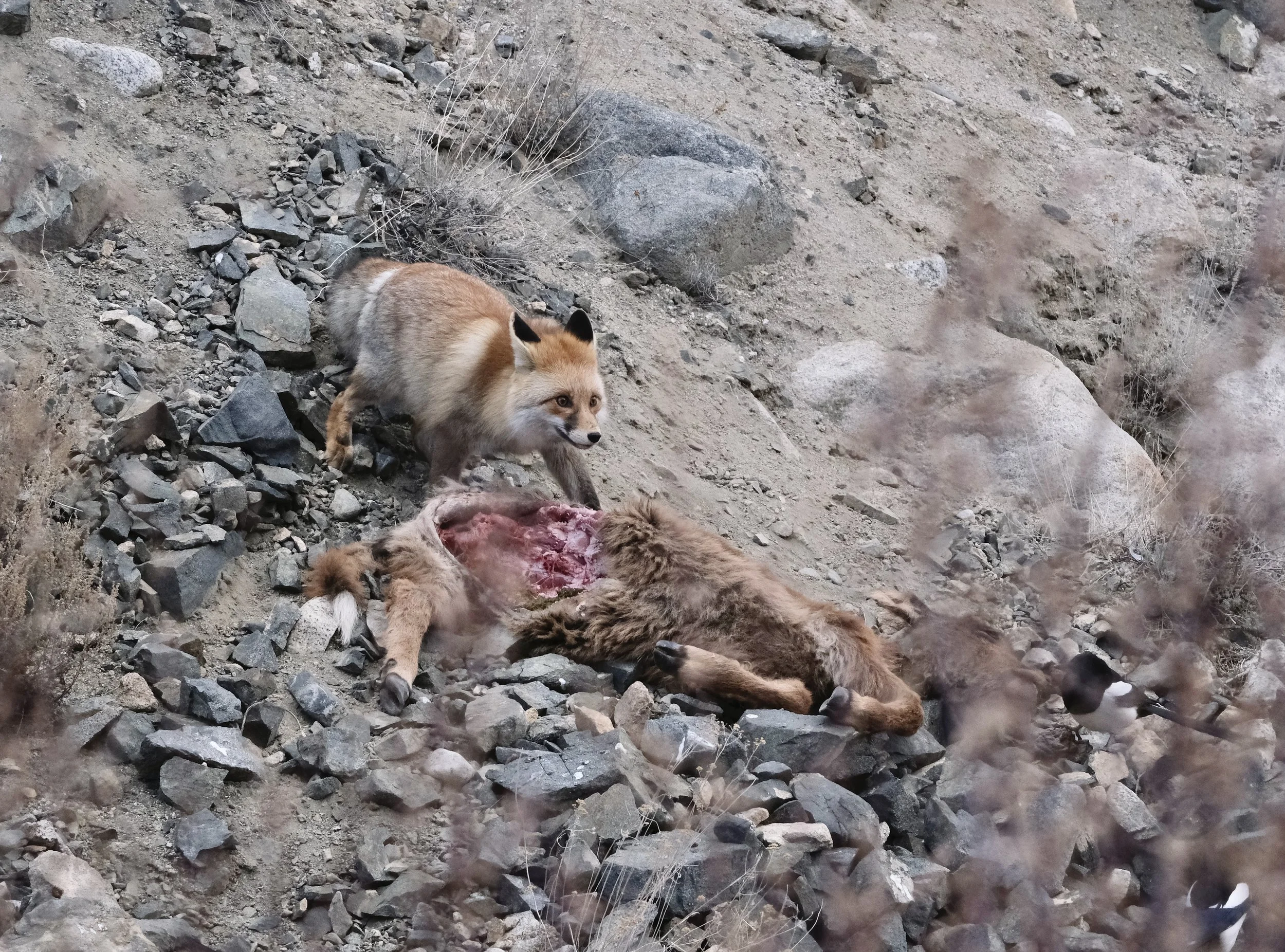
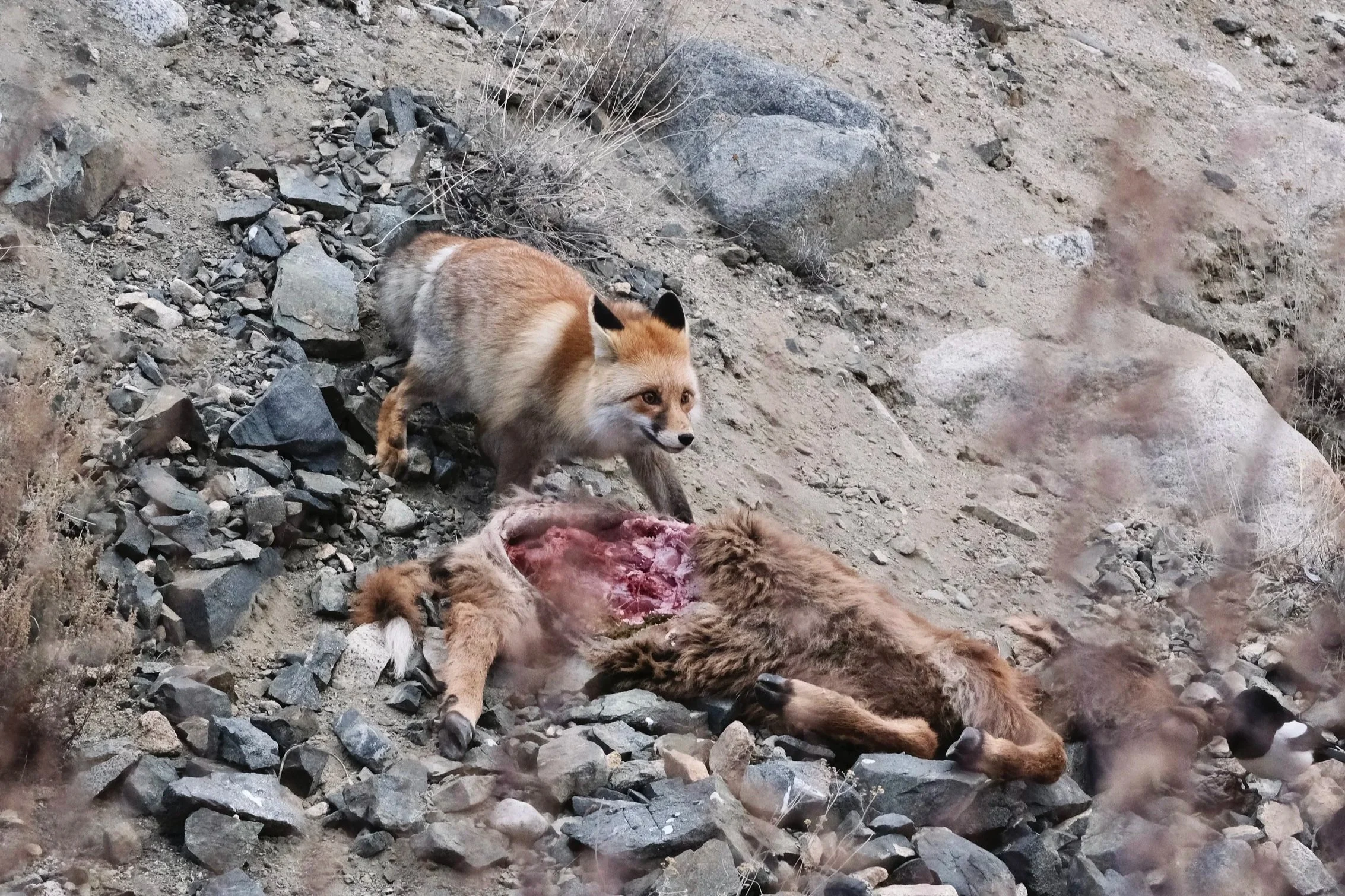
By the next day, scavengers had already arrived at the carcass to finish what the leopard left behind. A red fox was seen feeding on the remains, a reminder of how many smaller creatures rely on the kills made by larger predators. In these mountains, nothing goes to waste; life and death are deeply intertwined.